
Cyber Security Awareness Month 2026
Could a Cyber Attack Shut Down Your Building?
Tuesday, October 6th, 2026
Cyber Attacks Are No Longer Just About Stolen Data
When many people think about cyber security, they often think about hackers stealing personal information, payment data or confidential documents.
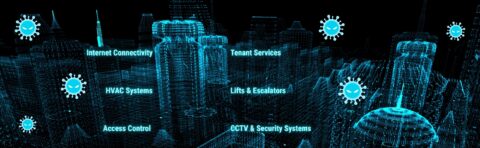
While data theft remains a serious concern, the reality facing commercial property owners, shopping centres and science parks is changing. Increasingly, cyber incidents are disrupting operational services rather than simply targeting information. Modern buildings rely on a complex ecosystem of connected technologies, and if those technologies are compromised, the consequences can extend far beyond the IT department. Commercial properties now depend on interconnected systems including CCTV, access control, building management platforms, environmental controls, tenant connectivity services and smart building technologies.
The critical question for property operators is no longer, “Could we lose data?” It is, “Could our building continue to operate if a key system is disrupted?”
Modern Buildings Depend on Technology
Today’s commercial properties have evolved into digitally connected environments where technology underpins everyday operations.
Building Management Systems (BMS), access control systems, lifts, CCTV, public Wi-Fi, environmental controls and cloud-hosted services all play an important role in maintaining a safe and effective environment for tenants and visitors. These systems increasingly combine traditional IT networks with Operational Technology (OT), creating a larger and more interconnected attack surface than many organisations realise.
As a result, cyber incidents can have direct operational consequences.
Scenario 1: Access Control Failure
Imagine arriving at a commercial office complex on a Monday morning and discovering that staff, tenants and contractors cannot access the building.
Modern access control systems are frequently integrated with identity platforms, management portals and network-connected devices. If a supporting system are unavailable due to a cyber incident, access management may be affected.
Potential impacts include:
- Delays in accessing the building
- Increased pressure on security teams
- Disruption to tenant operations; possibly loss of business
- Manual workarounds and increased administrative effort
For busy commercial properties, even relatively short disruptions can result in operational challenges and reputational damage.
Scenario 2: Lift and Escalator Disruption
Many modern lift and escalator systems incorporate remote monitoring and management capabilities to support maintenance and reliability.
If supporting systems become unavailable, building operators may need to revert to manual processes while investigations and recovery activities take place.
Potential consequences include:
- Reduced accessibility
- Increased facilities management workload
- Tenant complaints
- Disruption to visitor movement throughout the building
In large shopping centres and high-rise office environments, these disruptions can have a significant operational impact.
Scenario 3: HVAC and Environmental Control Outages
Heating, ventilation and air conditioning systems are increasingly managed through Building Management Systems.
Environmental controls play a critical role in:
- Tenant comfort
- Energy management
- Equipment protection
- Regulatory compliance
- Building efficiency
No one wants to work in a baking hot or freezing cold office. A disruption affecting environmental control systems could potentially affect the occupancy and usability of a building until normal service is restored. Commercial property environments increasingly rely on connected BMS platforms that require proper security controls and monitoring.
Scenario 4: CCTV and Security System Failure
Physical security systems have become digitally dependent.
CCTV platforms, remote monitoring solutions and integrated security management systems all rely on network connectivity and supporting infrastructure.
If those systems become unavailable, property operators may experience:
- Reduced visibility of security events
- Increased reliance on physical security personnel; and the associated costs
- Challenges investigating incidents
- Reduced confidence from occupants, visitors and stakeholders
Cyber resilience therefore plays a key role in supporting physical security resilience.
Scenario 5: Internet Connectivity Loss
Connectivity now underpins almost every aspect of commercial property operations.
Internet outages can affect:
- Tenant connectivity
- Voice services
- Cloud applications
- Property management systems
- Remote support services
- Building monitoring platforms
For many organisations, internet access is no longer a convenience. It is a critical business dependency.
Science parks, retail destinations and multi-tenant commercial properties are particularly vulnerable to connectivity-related disruption due to the large number of organisations relying upon shared infrastructure.
Scenario 6: Tenant Service Disruption
Property operators increasingly provide digital services to occupants, including:
- Shared connectivity
- Wi-Fi services
- Security systems
- Visitor management platforms
- Smart building applications
Cyber incidents affecting these shared services can quickly affect multiple tenants simultaneously.
The result may be:
- Service interruptions
- Operational inefficiencies
- Increased support requests
- A rise in tenant complaints
- Damage to reputation and trust
In multi-tenant environments, a cyber incident can become a business-wide issue rather than a technology issue.
Building Resilience into the Estate
The good news is that organisations can take practical steps to reduce the likelihood and impact of these scenarios.
Network Segmentation
Separating corporate IT systems from operational technology and building systems helps reduce the risk of threats moving between environments.
Segmentation is particularly important where BMS, CCTV, access control and tenant-facing services share connectivity infrastructure.
Multi-Factor Authentication (MFA)
Compromised credentials are still a common entry point for cyber attackers.
Implementing MFA across administrative accounts, remote access services and cloud platforms provides an added layer of protection against identity-based attacks.
Backup Verification
Having backups is important. Knowing they work is essential.
Regular testing helps ensure that critical systems and data can be recovered when required.
Organisations should understand:
- What is backed up
- How quickly services can be restored
- Whether recovery processes have been validated
Resilience Testing
Large office buildings test fire alarm systems weekly and conduct full evacuation drills once or twice a year, sometimes quarterly depending on local regulations and building size. Testing the cyber resilience of your building is no different.
A resilience strategy is no good to anyone if it’s just on paper and never tested.
Tabletop exercises, disaster recovery tests and incident simulations help organisations understand how they would respond during a real event.
Testing often finds weaknesses in procedures and systems, which can then be addressed before an attacker discovers them.
Incident Response Planning
The speed of response can significantly influence the impact of an incident.
Property operators should have documented processes that define:
- Roles and responsibilities
- Escalation procedures
- Communication plans
- Supplier involvement
- Recovery priorities
Preparation before an incident typically leads to a faster and more coordinated response.
How Modern Networks Helps Build Operational Resilience
At Modern Networks, we understand that commercial properties, shopping centres and science parks depend on technology to support daily operations.
Our approach focuses on resilience across the entire estate, including:
- Managed network services
- Cyber security monitoring
- Managed Detection and Response (MDR)
- Vulnerability management
- Tenant connectivity services
- Building systems security
- Incident response support
- Cyber governance and risk management
By combining managed infrastructure, cyber security expertise and operational support services, we help property operators reduce risk while maintaining reliable and secure services for occupants and stakeholders.
Cyber resilience is not simply about preventing attacks. It is about ensuring the organisation can continue to operate when challenges occur.
Review Your Building Resilience Strategy
A cyber incident does not need to involve stolen data to cause significant disruption.
For many commercial properties, the greater risk lies in operational outages that affect tenants, visitors, facilities teams and the wider business.
The most resilient organisations understand their dependencies, regularly test their controls and prepare for disruption before it occurs.
Cyber Resilience Checklist
Whether you manage an office building, flex workspace, science park, innovation hub, shopping centre or retail park, technology now underpins everything from access control and CCTV to connectivity and tenant services. The question isn’t whether you’re using technology, but whether your operations could continue if that technology became unavailable.
Our 3-Question Cyber Resilience Checklist is a quick way to assess your preparedness and identify potential gaps. If you’re not completely confident in the answers, it may be time to take a closer look at your cyber resilience strategy.
Need Expert Help?
If technology stopped working tomorrow, what would happen next? Speak to Modern Networks about assessing your Building Resilience Strategy and uncover opportunities to strengthen cyber resilience, improve recovery capabilities and protect operational continuity.